Your Factory RV Solar Package May Not Be Enough
A lot of RV owners discover the same problem the hard way: the factory solar package looked good on the sales sheet, but it does not match how they actually camp.
Maybe the refrigerator runs all day. Maybe someone sleeps with a CPAP. Maybe the batteries fall behind after one cloudy day. Maybe the inverter only powers a few outlets. Maybe the dealer said “solar ready” or “off-grid package,” but nobody explained what the system could actually run.
That is when many owners start searching for answers like why their factory RV solar package is not enough, how to perform an RV lithium battery upgrade, install an RV inverter upgrade, or find a Victron installer near me.
Solar Van Man helps RV owners move past vague factory packages and into real, usable energy systems designed around how the coach is actually used.
Solar Is Only One Part of the System
RV solar panels help recharge the battery bank. They do not create a complete off-grid system on their own.
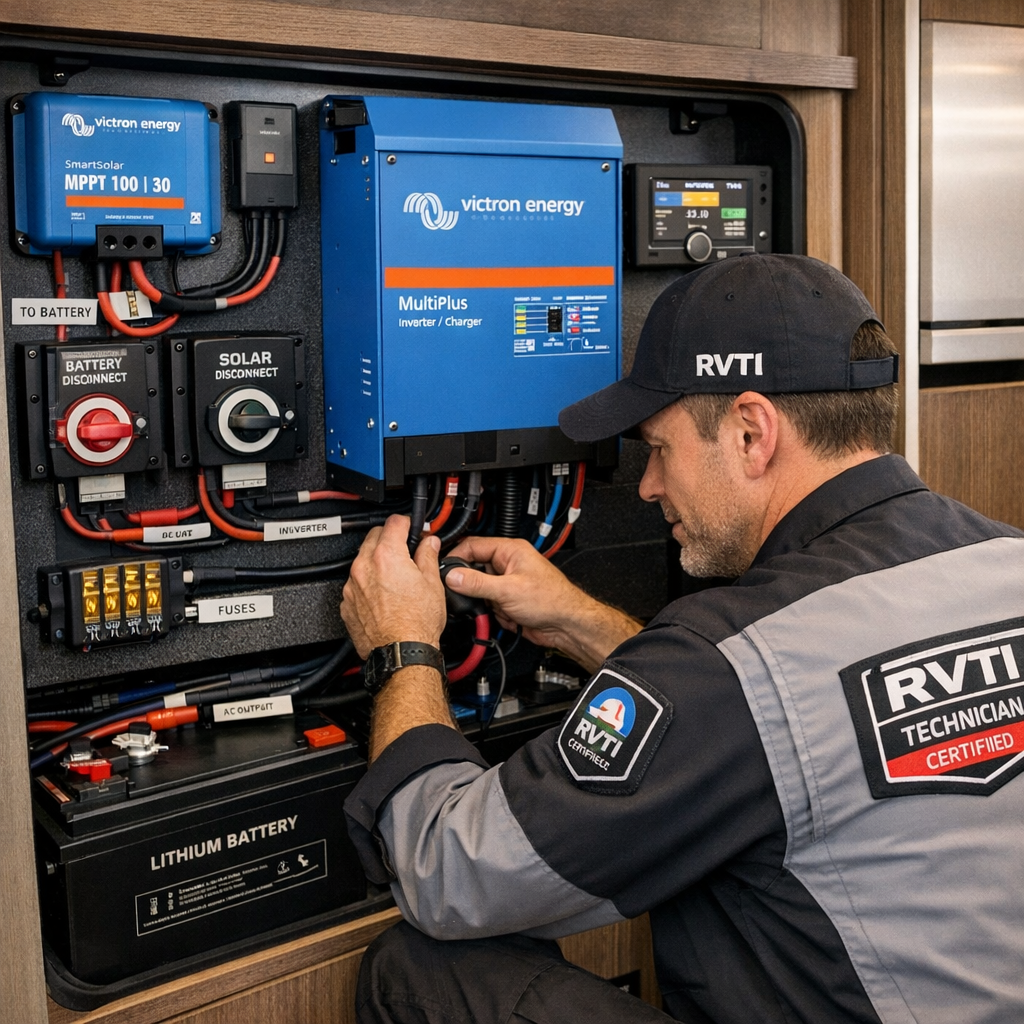
A serious RV energy system usually includes:
- lithium batteries
- a properly sized inverter/charger
- solar charge control
- battery shunt like a Victron SmartShunt
- internet-based remote hub, like a Victron Cerbo GX
- battery drain protect, like a Victron BatteryProtect
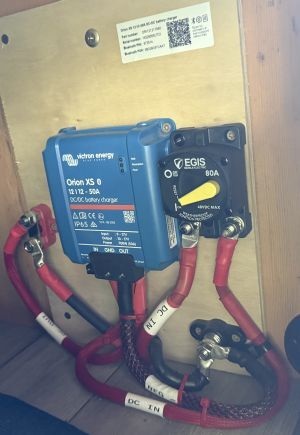
- alternator charging or DC-DC charging
- battery monitoring
- proper fusing, disconnects, cabling, and configuration
- clear load planning before parts are selected
That is why a good upgrade starts with the loads, not the panels. The right question is not simply, “How much solar can I fit on the roof?” The better question is: What do you want to run, for how long, and how do you want the system to recharge?
Running Air Conditioning Requires a Real Battery System
One of the most common goals is to run RV air conditioning off batteries.
That can be done, but it is not a small add-on. Air conditioning is one of the heaviest electrical loads in an RV. A proper design needs enough battery capacity, enough inverter capacity, proper wiring, correct protection, and a realistic understanding of runtime.
Some owners only need short air-conditioning support for lunch stops, pets, or a few hours before quiet time. Others want an overnight operation in a Class A, fifth wheel, truck camper, or van-chassis RV.
Those are different systems. They should not be quoted the same way.
Lithium Changes the RV Experience
A proper RV lithium battery upgrade can dramatically improve usable capacity, charging performance, weight, voltage stability, and system monitoring compared with older lead-acid or AGM battery banks.
Lithium is especially valuable when the RV has:
- a residential refrigerator
- off-grid air conditioning operation
- CPAP or medical loads
- inverter-backed outlets
- generator restrictions
- long travel days
- short overnight stops
- boondocking use
- high-demand 12V systems
For many owners, the best first move is to replace lead-acid with lithium RV batteries and add proper charging and monitoring. Solar can still be part of the system, but the battery bank and charging architecture determine whether the RV actually works the way the owner expects.
Residential Refrigerators Need Battery Planning
A residential refrigerator is convenient, but it changes the energy equation. Owners searching for means to run their residential refrigerator while boondocking are usually trying to solve one core problem: How do I keep the refrigerator running without constantly running the generator?
That answer depends on battery capacity, inverter efficiency, recharge sources, travel patterns, and how long the RV sits without hookups.
A residential refrigerator can be supported well, but it should not be treated as a mystery load. It needs to be measured, planned, protected, and integrated into the inverter system correctly.
CPAP Loads Require Reliability
A CPAP RV battery system should be designed with more discipline than a casual convenience load.
The system needs enough overnight battery reserve, clear state-of-charge monitoring, dependable charging, and a layout that does not leave the owner guessing at bedtime. For many RV owners, CPAP support is one of the strongest reasons to upgrade from a factory battery setup to a properly designed lithium and inverter system.
Inverter Upgrades Are About More Than Watts
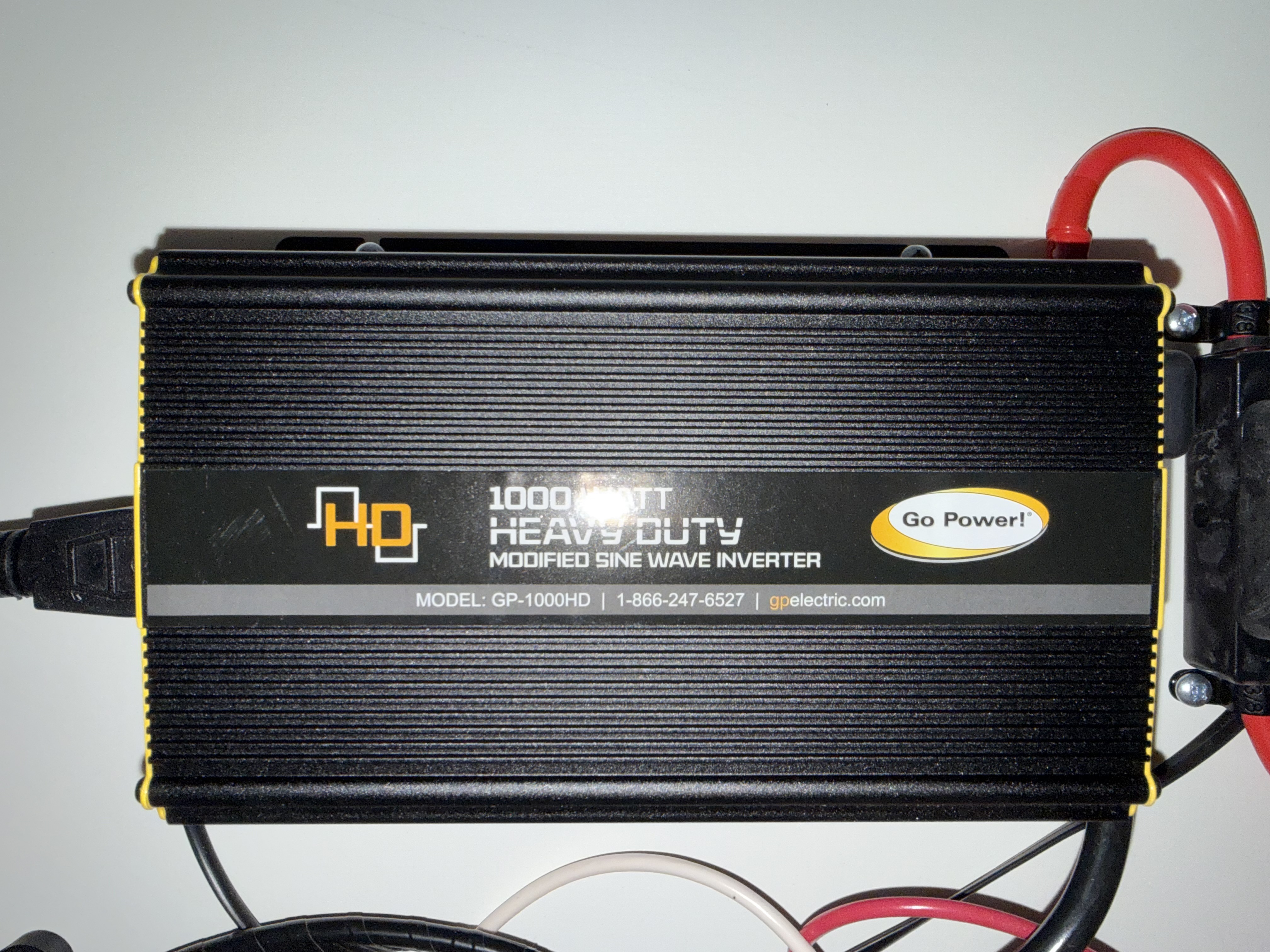
An RV inverter upgrade is not just replacing a box with a bigger box.
The inverter has to match the battery bank, wiring, fusing, transfer strategy, charging needs, and circuits being supported. Some systems only need selected outlets. Others need refrigerator support, microwave support, air-conditioning support, or a dedicated inverter-backed subpanel.
A clean inverter installation should make the RV easier to use, not harder to understand.
Why Victron Is Often the Right Platform
When owners search for a Victron installer near me, they are usually looking for something beyond basic parts replacement.
Victron systems are strong because they support integrated monitoring, configurable charging, inverter/charger control, solar charge control, DC-DC charging, and remote visibility when designed correctly. That matters in RVs because every coach is different, and every owner uses power differently.
Solar Van Man designs and installs RV energy systems with the full system in mind: batteries, inverter, solar, alternator charging, protection, programming, and owner handoff.
The Bottom Line
A factory solar package may be a starting point, but it is not always a complete off-grid energy system.
A proper RV power upgrade starts with the way the RV is used:
- what needs to run
- how long it needs to run
- how often the RV moves
- whether the owner uses hookups, a generator, solar, alternator charging, or all of them
- how much monitoring and control the owner wants
Solar Van Man designs RV energy systems for owners who want quiet power, longer stays, better battery performance, and less dependence on guessing, generators, and weak factory packages.
When the factory system is not enough, the solution is not more vague solar. The solution is a properly designed RV energy system.